HTC Hardness Tester
The Hardness Test Kit is a reliable tool designed to determine the scratch hardness of minerals, concrete, ceramics, stone, glass, coatings, and other hard materials using the internationally recognized Mohs Hardness Scale (1–10).
The kit includes precision hardness picks or reference points that allow users to quickly identify a material's hardness by comparing its resistance to scratching. It is widely used by geologists, construction professionals, flooring contractors, quality control inspectors, and laboratories for material identification and surface evaluation. Durable, portable, and easy to use, the Mohs Hardness Test Kit helps ensure accurate material assessment and supports the selection of appropriate grinding, cutting, and polishing tools
Key Features of Mohs Hardness Test Kit
- Accurate Hardness Measurement: Uses the Mohs hardness scale (1–10) to evaluate the scratch resistance of materials.
- Wide Testing Range: Suitable for testing minerals, stones, concrete, ceramics, glass, coatings, and other hard surfaces.
- Easy Scratch Test Method: Simple operation by comparing the scratching ability of standard hardness points.
- Portable Design: Compact and lightweight kit for on-site and laboratory testing.
- Durable Test Tips: Made from high-hardness materials for consistent and reliable results.
- Quick Material Identification: Helps determine material hardness without complex equipment.
- Cost-Effective Solution: Provides an economical method for hardness assessment compared with advanced testing instruments.
- User-Friendly: Requires minimal training and is suitable for professionals and beginners.
Common Applications of Mohs Hardness Test Kit
- Geology & Mineral Identification: Identifying and classifying minerals based on scratch hardness.
- Stone & Marble Testing: Checking hardness of natural stones, granite, marble, and tiles.
- Construction Industry: Evaluating concrete surfaces, aggregates, and building materials.
- Ceramic & Glass Testing: Measuring scratch resistance of ceramic products and glass surfaces.
- Mining & Exploration: Field testing and identification of mineral samples.
- Flooring Industry: Testing surface durability of stone, tiles, and polished concrete floors.
- Quality Control: Verifying material consistency during manufacturing processes.
- Educational Use: Demonstrations and practical learning in geology and material science.
Frequently Asked Questions (FAQ)
Q1. What is a Mohs Hardness Test Kit used for?
- A Mohs Hardness Test Kit is used to measure the scratch hardness of materials by comparing them with the Mohs hardness scale from 1 (softest) to 10 (hardest).
Q2. How does a Mohs hardness test work?
- The test is performed by scratching a material surface with hardness points of known values and observing whether a scratch is created.
Q3. What materials can be tested with a Mohs Hardness Test Kit?
- It can test minerals, rocks, concrete, ceramics, glass, tiles, coatings, and other hard materials.
Q4. Is the Mohs hardness test destructive?
- The test creates a small scratch on the surface, so it is considered a minor destructive test.
Q5. What is the hardness range of the Mohs scale?
- The Mohs scale ranges from 1 to 10, where talc is the softest (1) and diamond is the hardest (10).
Q6. Who uses a Mohs Hardness Test Kit?
- Geologists, engineers, construction professionals, stone fabricators, laboratories, and quality control teams use it.
Q7. Can the kit test concrete hardness?
- Yes, Mohs hardness testing can provide a quick indication of the scratch resistance and surface hardness of concrete and similar materials.
Q8. How accurate is a Mohs Hardness Test Kit?
- It provides a reliable comparative hardness value when used correctly, though it is not a replacement for advanced laboratory hardness testing methods.
Q9. Does the Mohs test require electricity or calibration?
- No. The kit is a manual testing tool and does not require power or complex calibration.
Q10. How should a Mohs Hardness Test Kit be maintained?
- Keep the test points clean, store them safely in the case, and avoid damaging the reference tips to maintain accuracy.
Original: $370.00
-65%$370.00
$129.50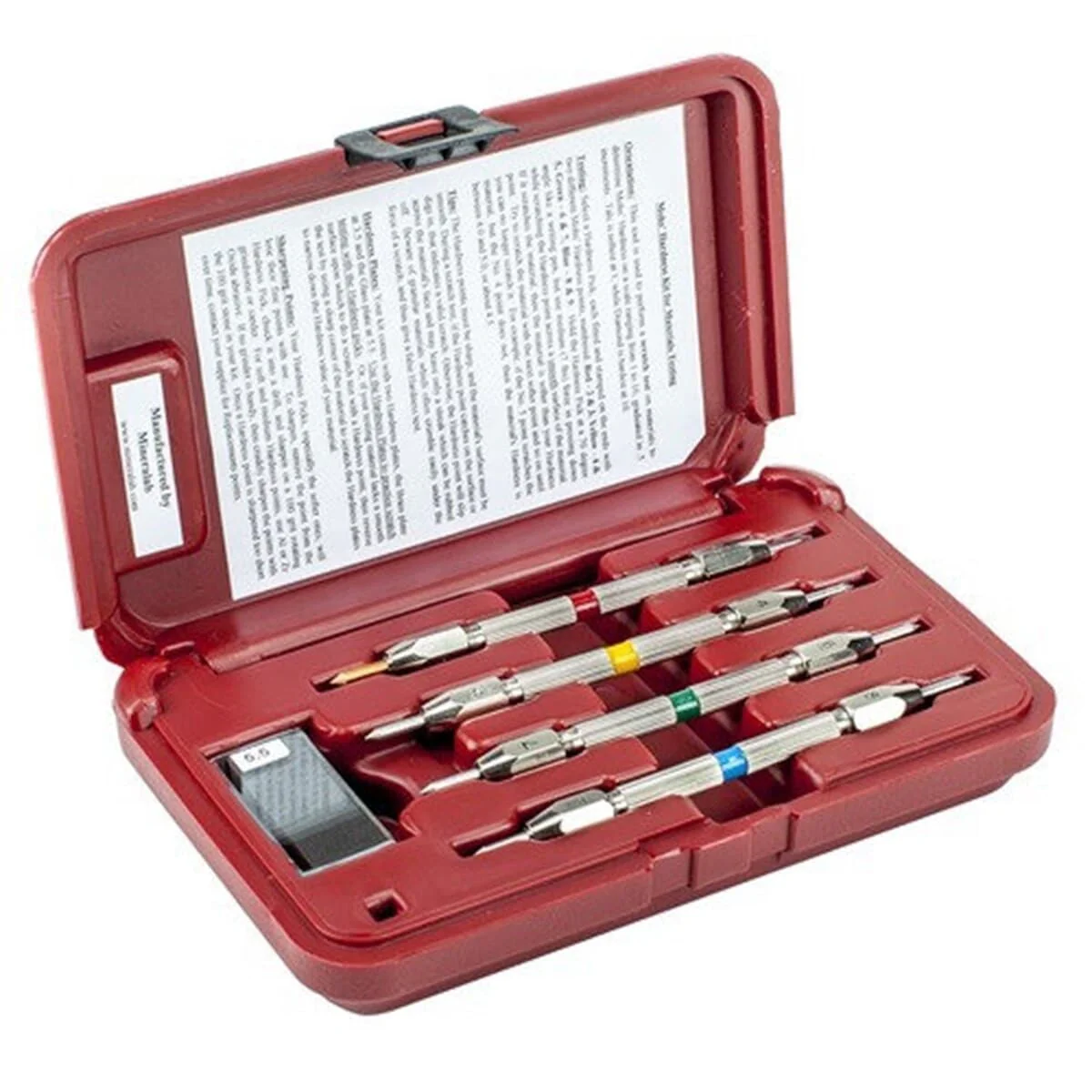
Description
The Hardness Test Kit is a reliable tool designed to determine the scratch hardness of minerals, concrete, ceramics, stone, glass, coatings, and other hard materials using the internationally recognized Mohs Hardness Scale (1–10).
The kit includes precision hardness picks or reference points that allow users to quickly identify a material's hardness by comparing its resistance to scratching. It is widely used by geologists, construction professionals, flooring contractors, quality control inspectors, and laboratories for material identification and surface evaluation. Durable, portable, and easy to use, the Mohs Hardness Test Kit helps ensure accurate material assessment and supports the selection of appropriate grinding, cutting, and polishing tools
Key Features of Mohs Hardness Test Kit
- Accurate Hardness Measurement: Uses the Mohs hardness scale (1–10) to evaluate the scratch resistance of materials.
- Wide Testing Range: Suitable for testing minerals, stones, concrete, ceramics, glass, coatings, and other hard surfaces.
- Easy Scratch Test Method: Simple operation by comparing the scratching ability of standard hardness points.
- Portable Design: Compact and lightweight kit for on-site and laboratory testing.
- Durable Test Tips: Made from high-hardness materials for consistent and reliable results.
- Quick Material Identification: Helps determine material hardness without complex equipment.
- Cost-Effective Solution: Provides an economical method for hardness assessment compared with advanced testing instruments.
- User-Friendly: Requires minimal training and is suitable for professionals and beginners.
Common Applications of Mohs Hardness Test Kit
- Geology & Mineral Identification: Identifying and classifying minerals based on scratch hardness.
- Stone & Marble Testing: Checking hardness of natural stones, granite, marble, and tiles.
- Construction Industry: Evaluating concrete surfaces, aggregates, and building materials.
- Ceramic & Glass Testing: Measuring scratch resistance of ceramic products and glass surfaces.
- Mining & Exploration: Field testing and identification of mineral samples.
- Flooring Industry: Testing surface durability of stone, tiles, and polished concrete floors.
- Quality Control: Verifying material consistency during manufacturing processes.
- Educational Use: Demonstrations and practical learning in geology and material science.
Frequently Asked Questions (FAQ)
Q1. What is a Mohs Hardness Test Kit used for?
- A Mohs Hardness Test Kit is used to measure the scratch hardness of materials by comparing them with the Mohs hardness scale from 1 (softest) to 10 (hardest).
Q2. How does a Mohs hardness test work?
- The test is performed by scratching a material surface with hardness points of known values and observing whether a scratch is created.
Q3. What materials can be tested with a Mohs Hardness Test Kit?
- It can test minerals, rocks, concrete, ceramics, glass, tiles, coatings, and other hard materials.
Q4. Is the Mohs hardness test destructive?
- The test creates a small scratch on the surface, so it is considered a minor destructive test.
Q5. What is the hardness range of the Mohs scale?
- The Mohs scale ranges from 1 to 10, where talc is the softest (1) and diamond is the hardest (10).
Q6. Who uses a Mohs Hardness Test Kit?
- Geologists, engineers, construction professionals, stone fabricators, laboratories, and quality control teams use it.
Q7. Can the kit test concrete hardness?
- Yes, Mohs hardness testing can provide a quick indication of the scratch resistance and surface hardness of concrete and similar materials.
Q8. How accurate is a Mohs Hardness Test Kit?
- It provides a reliable comparative hardness value when used correctly, though it is not a replacement for advanced laboratory hardness testing methods.
Q9. Does the Mohs test require electricity or calibration?
- No. The kit is a manual testing tool and does not require power or complex calibration.
Q10. How should a Mohs Hardness Test Kit be maintained?
- Keep the test points clean, store them safely in the case, and avoid damaging the reference tips to maintain accuracy.